
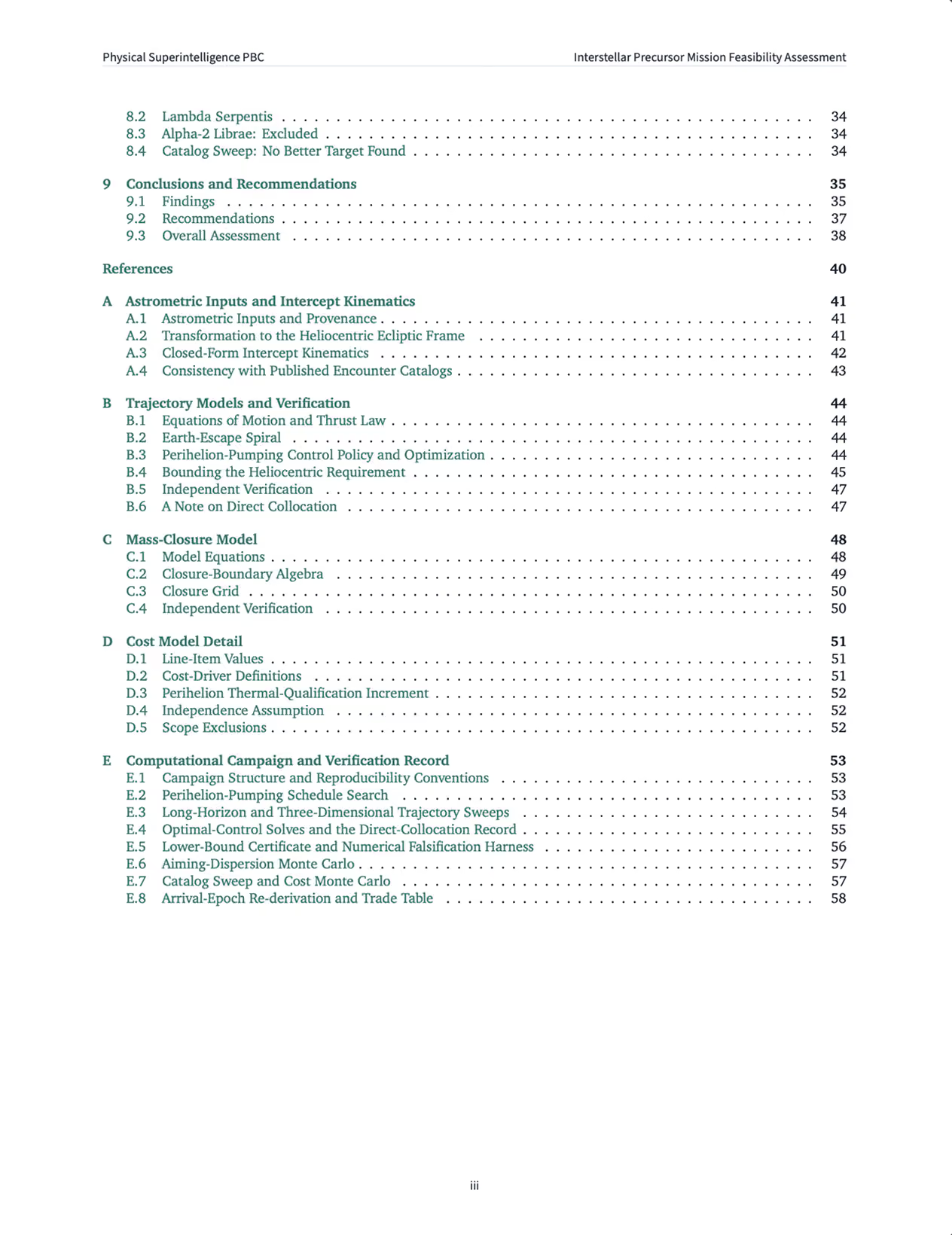
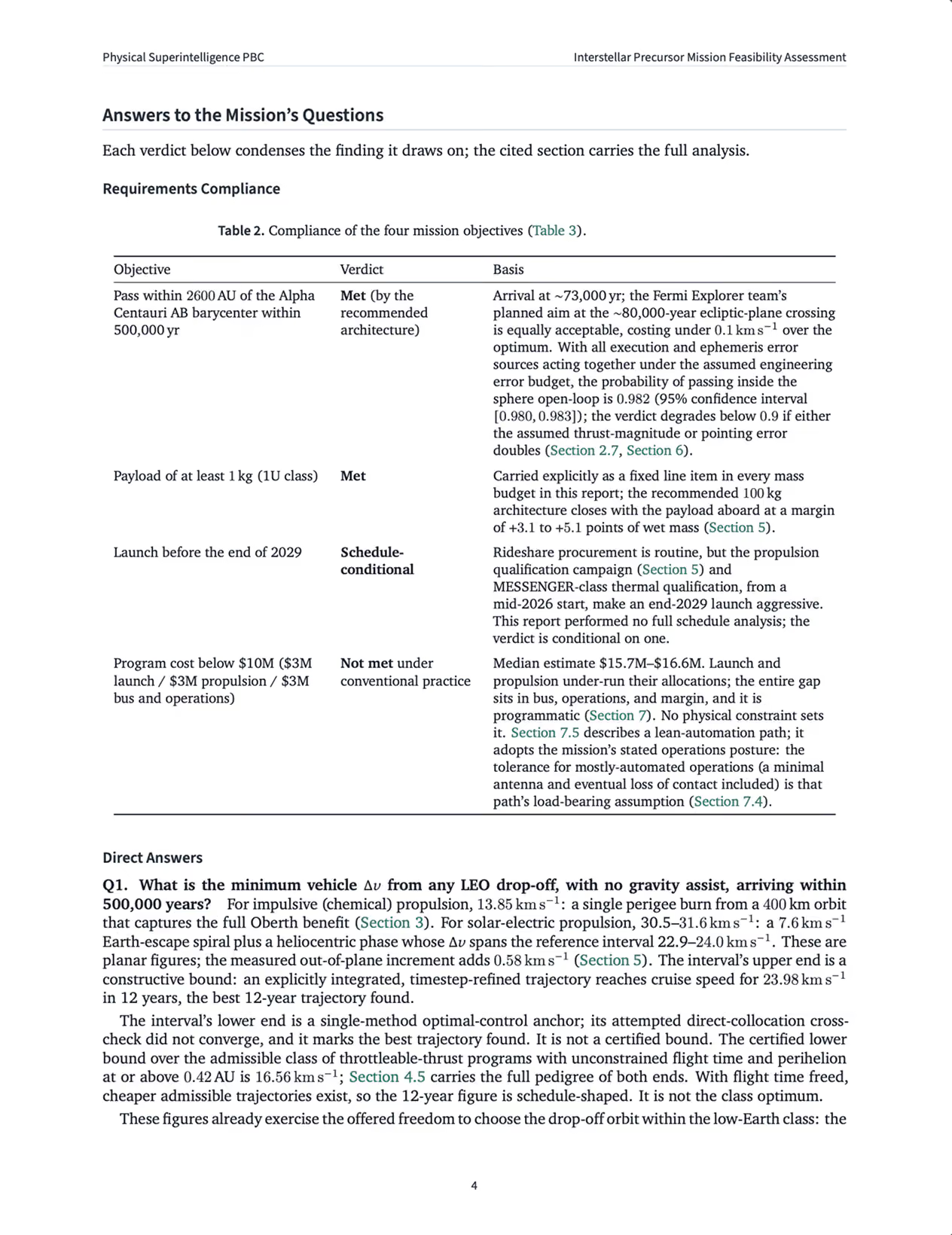
The Fermi Explorer Mission has 4 primary objectives:
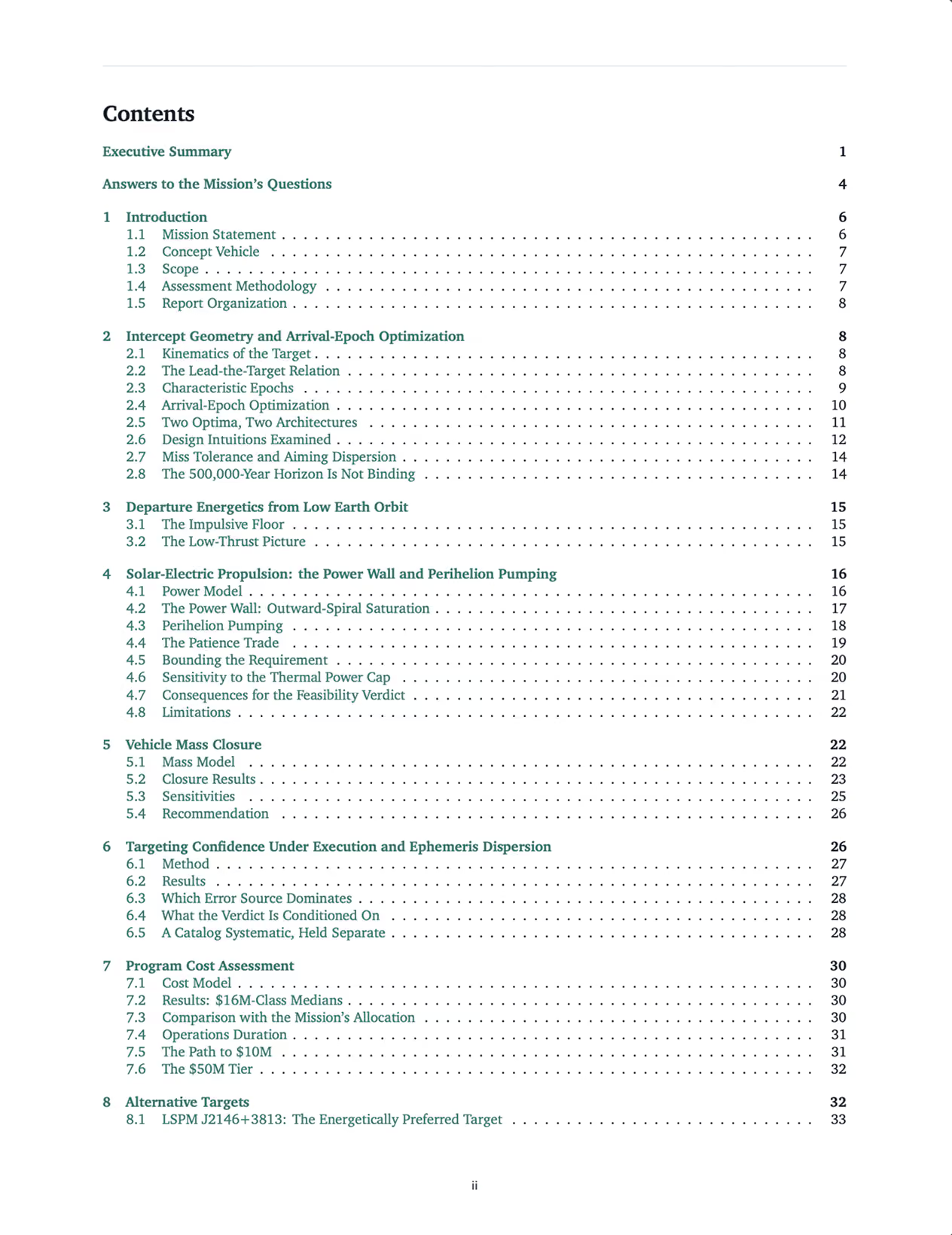
Aim
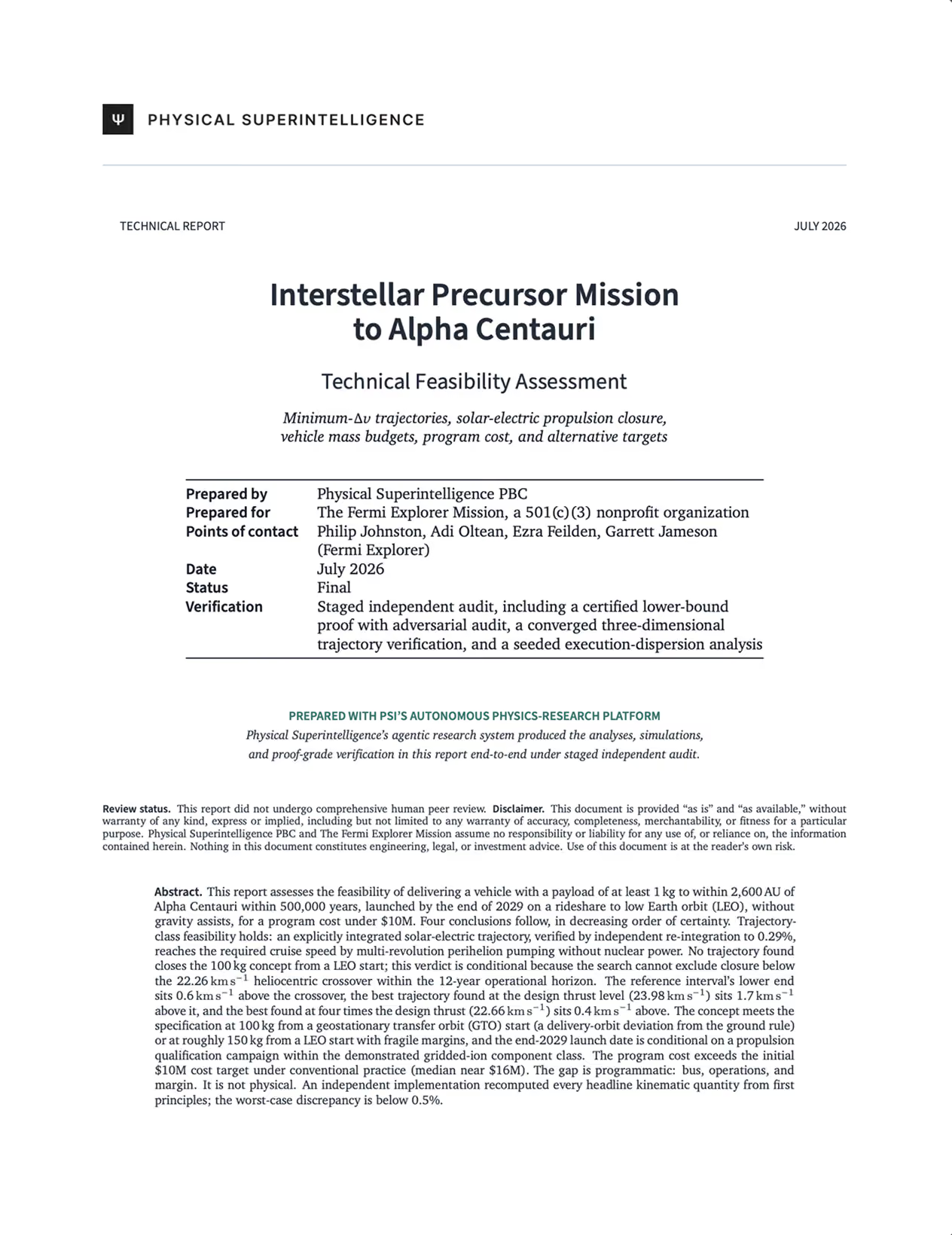
To launch the first spacecraft to another star. It should get at least 99% of the way to the nearest star system, Alpha Centauri, within 80,000 years.
Payload
It should have at least a 1kg, 10x10x10 cm payload.
Schedule
It should launch before the end of 2029
Cost
It should cost less than $15M to design, build, launch, and operate.
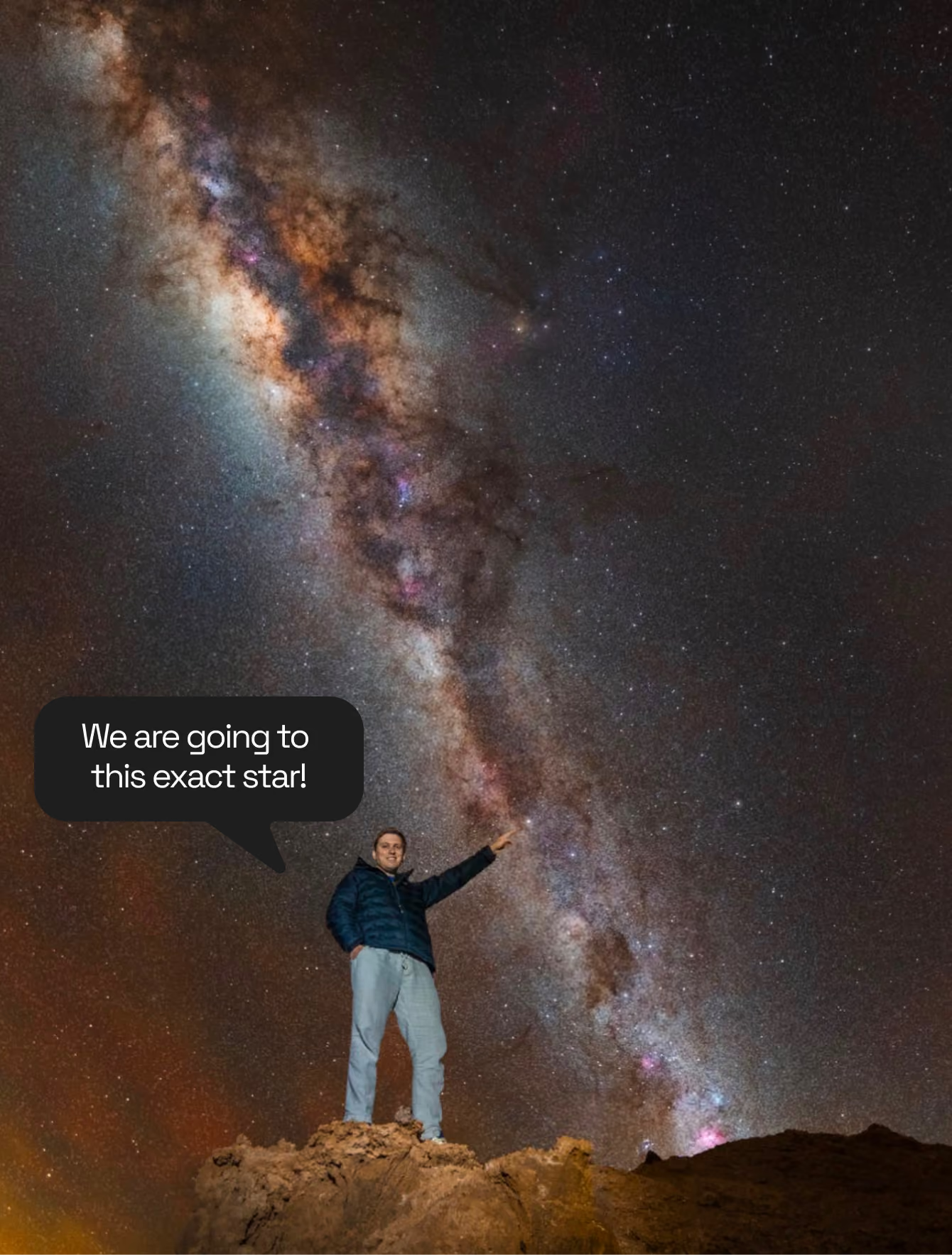
Fermi Explorer Mission co-founder & CEO, Philip Johnston, pointing at the exact star Alpha Centauri - the target of the mission. Taken by astrophotographer, Alexis Trigo, in the Atacama Desert, Chile, with a 20-second exposure, July 14th, 2026











We have a media kit folder here. Members of the press and others are welcome to use these items freely with attribution.
Make your mark on humanity's first journey to another star
Mission record
- Name on official website
- Official mission supporter
Initials engraving
- Your initials + 1 other set of initials
- Small engraving on the spacecraft
Name engraving
- Your full name + 1 other full name
- Small engraving on the spacecraft
Small object
- 2×2×2 mm cube to fill e.g. a strand of hair (DNA), a grain of sand, or ashes
- 2×2 cm image + 2 names engraved
Frequently Asked Questions
Learn more about the spacecraft, the technology, and how this Mission will begin humanity's first journey to another star.
The Fermi Explorer Mission has four primary objectives:
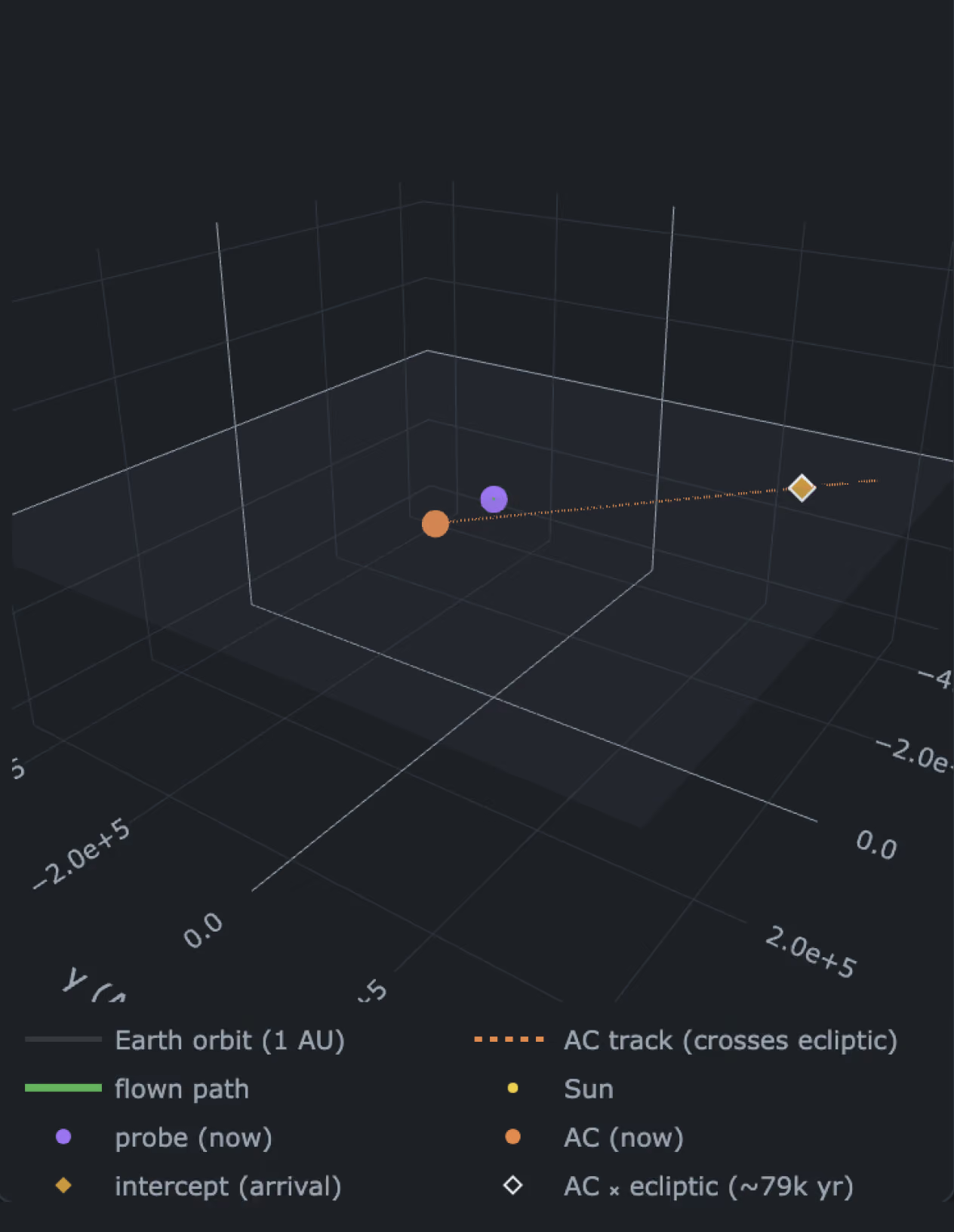
- Aim: To launch humanity's first spacecraft to another star. It should get at least 99% of the way to the nearest star system, Alpha Centauri (AC), within 80,000 years. The AC barycenter is currently 4.4 light-years away, so we are aiming to be within 0.044 light-years at the spacecraft’s closest pass by AC, which is within the Oort Cloud of AC. The aim is to minimize fuel and cost, and maximize payload, so we expect to aim for just before the intercept of Alpha Centauri with the ecliptic plane, which will occur in around 79,500 years. By the time that the Fermi Explorer arrives at AC, it will be just over 6 light years from the Sun since AC will then be moving away from us, so by that point, it will be more than 99% of the distance to AC.
- Payload: It should have at least a 1kg, 10cm x 10cm x 10cm payload. Some of the space will be reserved for donor, scientific, and artistic payloads as per the donor page and below.
- Schedule: It should launch before the end of 2029.
- Cost: It should cost less than $15M to design, build, launch, and operate. See the PSI paper for cost estimations.
The four primary objectives above are what we consider to be the minimum viable mission to another star. We do, however, have some other objectives that will not conflict with these:
- We will put a copy of the Golden Record and other similar information on the spacecraft.
- We will soon open up a three-month solicitation period for scientific instruments/items to be put on the Fermi Explorer Mission. Proposals should not conflict with the four primary objectives. Scientists should expect that for most sensors, we will likely not get data back from these instruments for around 80,000 years. Proposals will be selected by a panel of academics and space experts. See the questions further down for examples of scientific payloads that we expect to fly.
- We will soon open up a three-month solicitation period for artistic additions to be put on the Fermi Explorer Mission. Proposals should not conflict with the four primary objectives. Artists should expect that the art will not be seen again for around 80,000 years. Proposals will be selected by a panel (to be announced) of art and culture experts.
- The Apollo Moon landings took messages from the leaders of the countries of the world to the Moon. As an homage, we will give children in each country/region on Earth (as determined by IOC Olympic participation) the chance to choose 300 characters, in their own language, to put on the spacecraft. This will be coordinated by the national space agencies and the ministries of education of each country. We will announce the solicitation timeline and process in the coming months.
The mission is intended to make the idea of interstellar travel real, and to encourage more people to confront one of humanity’s biggest unanswered questions when we look beyond our planet: "Where is everybody?" (the Fermi Paradox)
The mission is named after the physicist Enrico Fermi, after whom the Fermi Paradox is named. The Fermi Paradox is the apparent inconsistency between the lack of conclusive evidence of extraterrestrial civilizations and the apparently high likelihood of their existence. One of the goals of the mission is to draw attention to the fact that it would be relatively easy to settle the galaxy in a few million years, not long in galactic timescales. Put simplistically, the Fermi Paradox implies one of three possibilities:
- Human-like intelligence is exceptionally rare in the universe.
- Human-like intelligence is not rare but doesn’t last very long for some reason.
- Human-like intelligence is common and lasts a long time, but cannot, or decides not to make itself known for some reason.
There is a concept called a Fermi Great Filter, which says that the Fermi Paradox is explained by the existence of a great filter that is extremely hard for life to pass through. Some good candidates that are behind us are the emergence of life or the evolution from single-celled to multicellular life. Fermi Great Filters in front of us could be that species can’t become multi-planetary or multi-stellar, or that species decide not to expand past their home star for some reason. By launching the Fermi Explorer mission, we can for the first time tick two possible Fermi Great Filters off the list:
- That it is impossible for an intelligent species to leave for their nearest stars
- That all intelligent species decide not to leave their home star for some reason
After the Fermi Explorer mission, we will have more confidence both that it is possible for intelligent species to leave for their nearest star in a way that isn’t resource prohibitive, and that there are at least some species that try to do it (namely us!). This has the effect of throwing the Fermi Paradox into even greater focus. It makes Hart's Fact A of the Hart-Tipler Conjecture even more surprising and confusing, and increases the likelihood that the solution to the Fermi Paradox is either that we are exceptionally rare, or that intelligent life is short-lived for some reason. Both of these should have consequences for how we live today. If intelligent life is very short lived, for some reason, then we should know and be prepared for that in the short term. And if we are exceptionally rare, then we need to take our role as stewards of consciousness very seriously, also in the immediate term.
Everyone has their own reasons for supporting the mission. For some, it is the human spirit of exploration and adventure: to take the first steps to extend consciousness to the stars. For others, it is to prove that we can rule out several Fermi Great Filters. Others view this as one of the most significant moments in the life of the universe. Five billion years from now, if and when we have settled the local group of galaxies, if you look back at the significant points in time, there will be a few very important points. The first life, the first multicellular life, the first multiplanetary exploration, and the first interstellar spacecraft will all be up there.
Alpha Centauri has the closest sun-like stars. Proxima Centauri, which is a red dwarf, is around 3% closer to the Sun than the pair of stars that make up Alpha Centauri, AC-A and AC-B. We chose Alpha Centauri since we believe that future humans and intelligences will be more interested in setting up a base there due to the fact that it emits around 2000 times more energy than Proxima Centauri. If we were to choose a red dwarf, then LSPM J2146+3813 is a better target than Proxima Centauri, as it requires a lot less propellant and cost to get there.
We chose Alpha Centauri over other sun-like stars since it is the closest and is currently moving towards us. Alpha Centauri also has the nice property of being one of the most prominent and beautifully located stars in the night sky. We hope that it will be inspiring that future generations can look up and know that humanity has sent something there. In fact, in Andean astronomy, Alpha Centauri has had special significance for hundreds of years as the eye of the Celestial Llama drinking in the Milky Way to prevent floods.
It should be noted that over many thousands of years, Alpha Centauri is moving northwest in the night sky and so we will not aim for its current location. We will aim for its position in about 80,000 years, which is in the part of the night sky where the constellation Cancer is now.
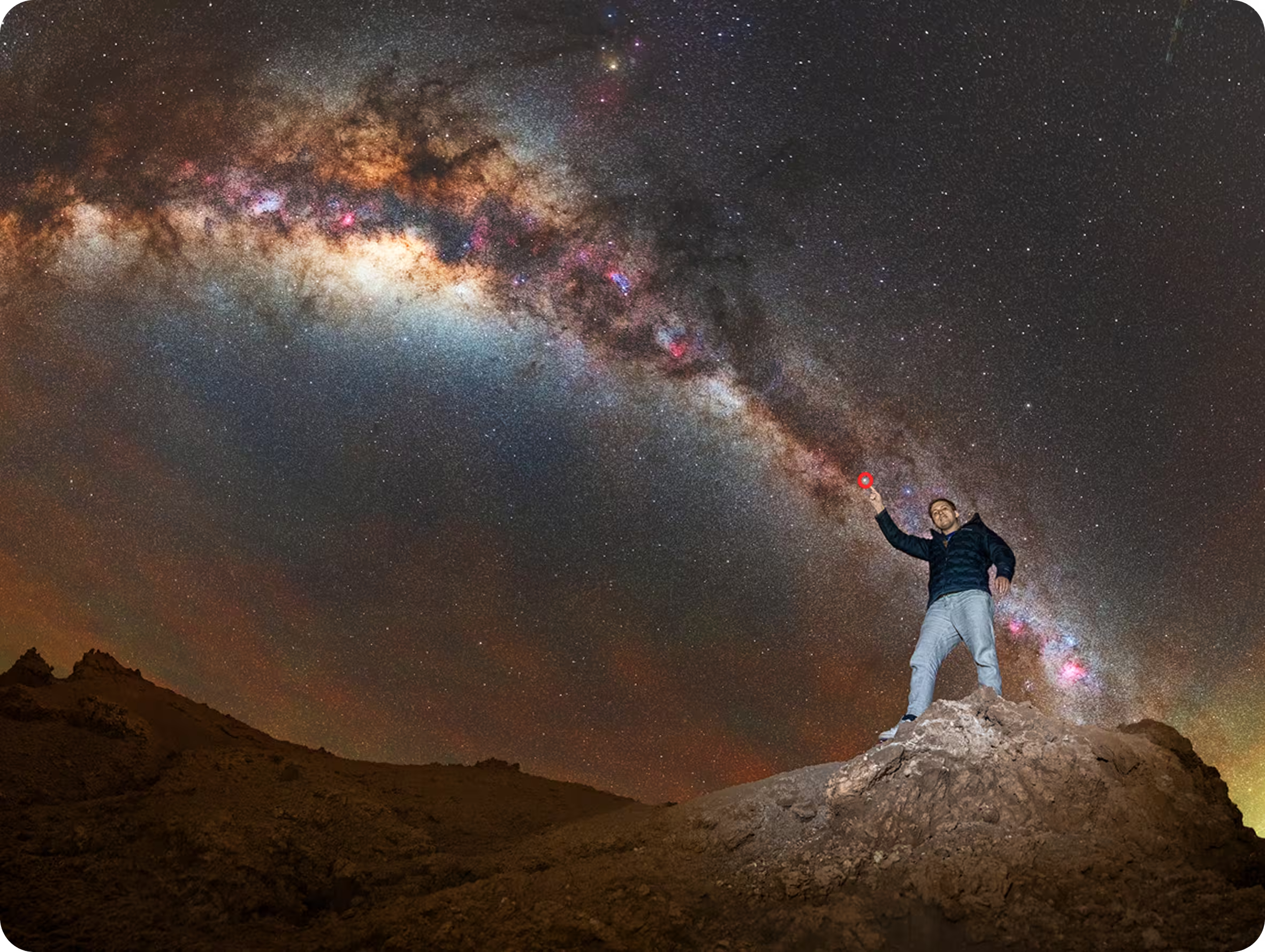
The image below shows Fermi Explorer Mission Co-founder & CEO, Philip Johnston, pointing at the exact star Alpha Centauri - the target of the mission. The inside of the red circle is approximately the area of the target that the Fermi Explorer spacecraft will aim for in the night sky, in order to be within 1% of the distance at closest pass. That is, the radius of this circle at a distance of 4.4 light-years is around 0.044 light years. The image was taken by astrophotographer, Alexis Trigo, in the Atacama Desert, Chile, with a 20-second exposure on July 14, 2026.